
How Do Vibration Massage Systems Work?
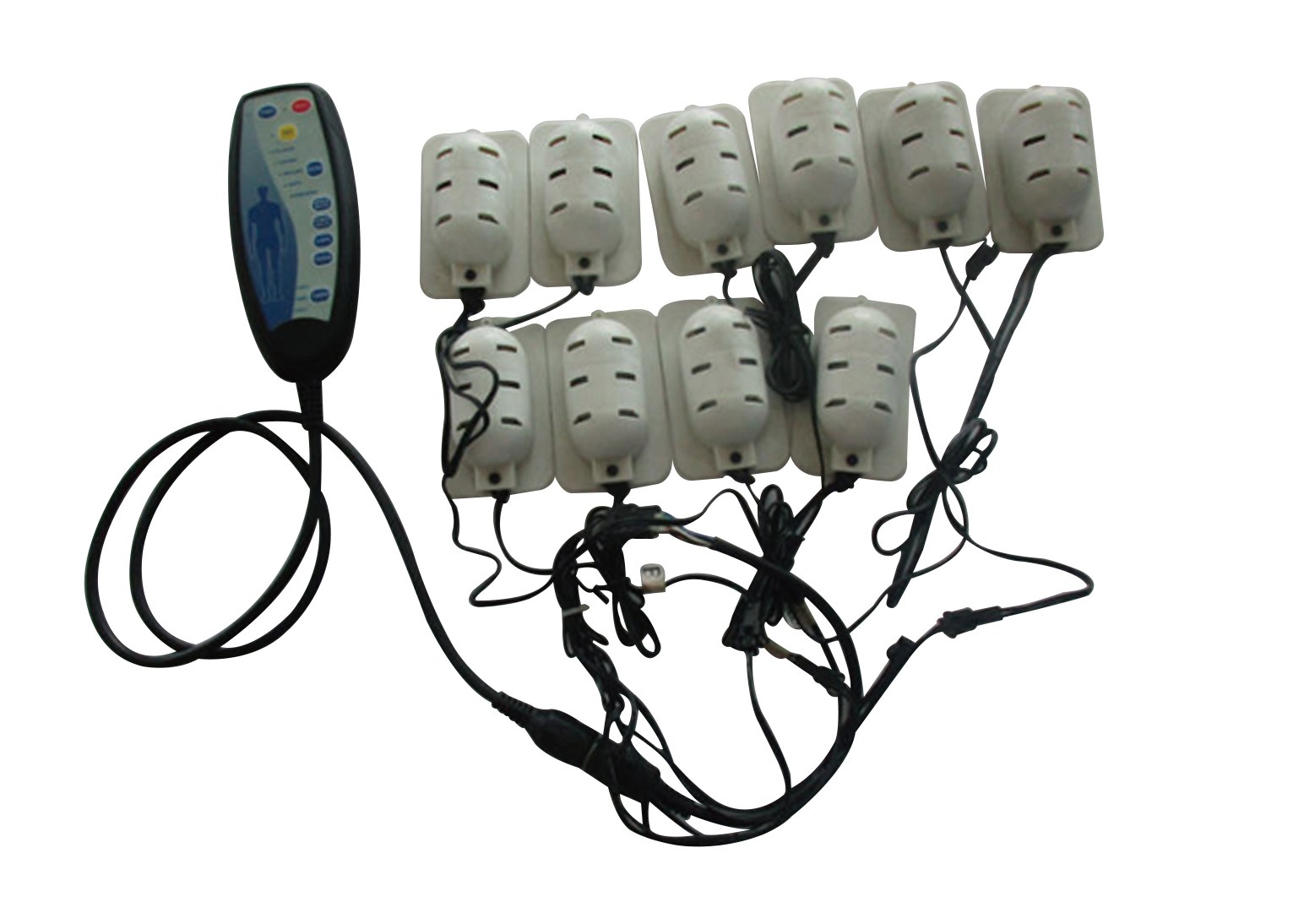
A vibration massage system is not a single part. It is a set of vibration motors, a control circuit and a mounting path that together add vibration to a seat, backrest or cushion. Before asking for samples, buyers usually need three answers: how the motor produces motion, how the controller drives modes and intensity levels, and how the whole assembly fits into their own furniture or finished product.
Both live in Xiamen Wellness Technology's catalog, and they are easy to confuse. One is a component system that a furniture manufacturer installs; the other is a finished wellness device a brand can take as a ready product. This article works through the chain from motor to controller to integration, and draws a clear line between vibration motors and mechanical Shiatsu kneading mechanisms — two different components that solve different problems.
Key takeaways
- A vibration massage motor rotates an eccentric mass, so the imbalance produces vibration rather than rolling kneading.
- The control circuit sets mode, intensity level and timer; the motor and housing design determine what the motion feels like.
- Heating can be built into the same component system, as in the two-motor W6122 with a 12W heating element.
- Component systems are integrated into a seat or backrest frame; finished devices are ready-made cushions and pillows.
- Wiring, connectors and mounting details are confirmed per project with the supplier's technical team.
What is a vibration massage system, as a component versus a finished device?
In the vibration massage systems category, a component system is a set of parts sold for installation inside another product. The buyer is typically a furniture manufacturer or brand owner who already has a recliner, sofa or massage cushion design, and needs the vibration mechanism, controller and wiring built into it.
Xiamen Wellness Technology operates two complementary lines: finished wellness products on one side, and massage mechanisms and components on the other. For component systems, the catalog states that units install inside the seat, backrest or frame of recliners and sofas, work with an external control path, and compatibility is confirmed per project. MOQ is 1,000 pieces with a lead time of 15 to 45 days per the client document. Those numbers apply to the component systems, not necessarily to every finished product.
A finished device, by contrast, arrives complete. The buyer does not install motors into their own frame; they pick a cushion or pillow and sell it under their brand. Both lines work on the same principle — eccentric-mass vibration motors — but the specific parts, configurations and commercial terms are confirmed per model and per project.
How does a vibration massage motor work?
A vibration massage motor is a small electric motor with an unbalanced mass attached to its shaft. When the motor spins, that offset weight rotates and produces a repeating out-of-balance force. The housing and the seat surface transmit that force to the user as vibration. The motor itself does not push or knead tissue the way a roller does; the motion is oscillatory.
What is a vibration massage mechanism?
In sourcing language, a massage vibration mechanism is the same assembly seen from the outside: one or more vibration motors, the offset weights, the housings that transmit motion into the seat surface, and the wiring that connects everything to a controller. No roller, rail or kneading node belongs in it. If a quotation for a "vibration" mechanism includes traveling rollers, that is a Shiatsu mechanism and should be specified and quoted as one.
In practice, the vibration motor for a massager runs from a low-voltage DC supply. The catalog component systems both specify 12VDC input: the W850-10 at 1A and the W6122 at 2A. The difference in current draw reflects the second system's added heating element rather than a different motor principle.
The way a motor is mounted matters as much as the motor itself. A component system places motor units under the upholstery, and the mounting point, the cushion thickness and the frame all affect how much of the vibration reaches the user. Because the catalog leaves mounting and wiring details to be confirmed per project, those parameters should be agreed with the technical team rather than assumed from a catalog page.
How does the control circuit run modes, intensity and timers?
Between the user and the motors sits the control circuit, usually packaged on a small board with a wired controller. The controller does not change the physics of the motor; it switches power on and off in patterns and regulates how much current reaches each motor unit.
That is how a massage vibration mechanism can offer several modes and intensity levels from a small number of motors. The two component systems show different configurations of the same idea:
| Component system | Motors | Modes and intensity | Timer options | Input | Heating |
|---|---|---|---|---|---|
| 10-Vibrator Massage System Model W850-10 | 10 vibration motors | 5 modes, 3 adjustable intensity levels | Selectable 15 / 30 / 60 minutes | 12VDC / 1A | None listed |
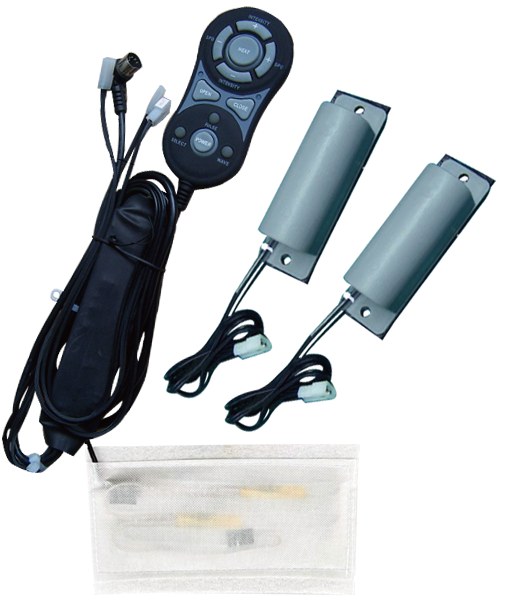
| 2-Vibrator Massage System with Heating Model W6122 | Dual-motor vibration | 3 modes, 5 intensity levels | 20 minutes | 12VDC / 2A | 12W heating element |
The timer is part of the control circuit, not a separate safety device. It ends the session after the selected duration. On the W850-10 the buyer's design can choose among three timer lengths; on the W6122 the timer is fixed at 20 minutes, which suits a combined heat-and-vibration session.
For a finished device, the same logic appears packaged differently. The 9-Motor Massage Cushion W859 uses 9 motors with 8 pre-programmed modes and 5 intensity levels distributed across 4 massage areas, a 10 / 20 / 30 minute timer, and no heating; it is supplied with both a car adapter and a home plug, which covers seat cushions used in living rooms and vehicles alike. That arrangement suits a brand that wants one cushion to cover the whole back rather than a single zone.
How do heating and vibration combine?
Heating is an add-on function on top of the vibration massage mechanism, not a mode of the motor. The W6122 pairs its two vibration motors with a 12W heating element, so a single controller runs both functions. The higher 2A input on that system is the practical sign of the added heating load.
The same pairing shows up in finished products. The Vibration and Heat Massage Pillow W3029 has one vibration motor with hi/lo levels and one heating pad with hi/lo levels, a 60-minute timer, a built-in rechargeable battery and flame-retardant fabric. Next to the W859, it is the other side of the finished-line choice: smaller, battery-powered and heated, where the W859 is a larger mains-and-car-powered cushion without heat.
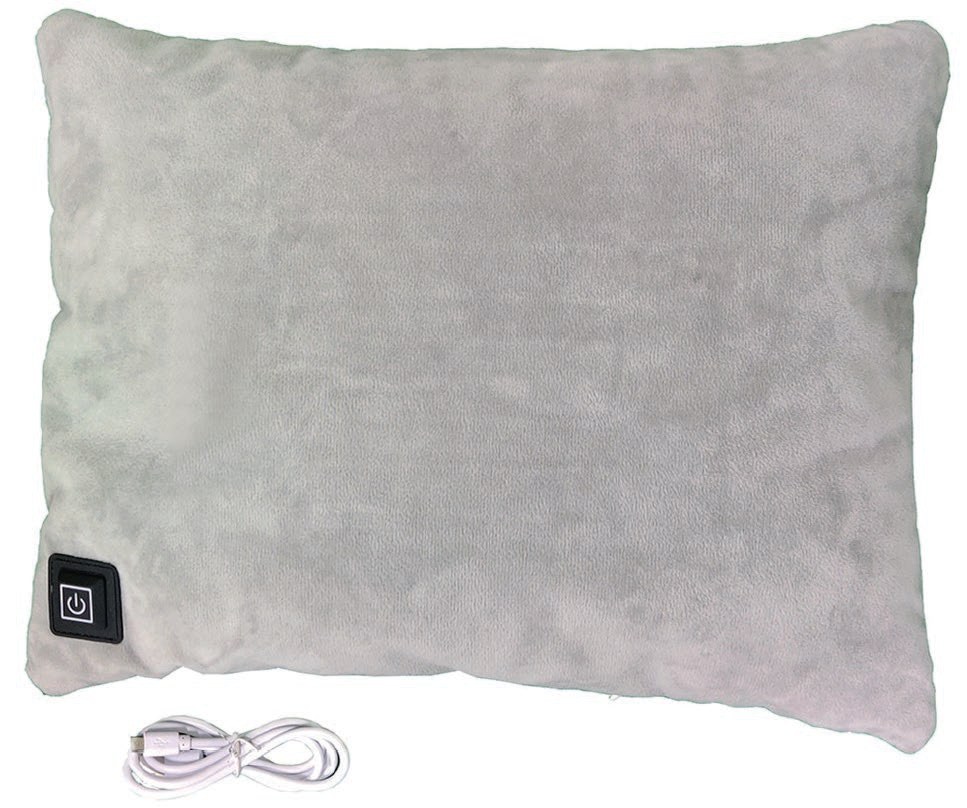
When buyers ask whether a system "has heat," the answer depends on the model. The W850-10 lists no heating. The W6122 has it. The same applies on the finished line: the W3029 has a heating pad, the W859 does not. Choosing between them is a design decision about whether the application needs warmth as well as vibration, and whether the power budget can carry the heating element.
What is the difference between vibration and Shiatsu massage?
This distinction matters because the two mechanisms are frequently listed together as if they were interchangeable. They are not the same component type.
A vibration motor rotates an eccentric mass and produces vibration. A Shiatsu mechanism is a mechanical kneading device: a motor drives rollers or nodes that press and roll along the back. To see the difference in the catalog, compare the Shiatsu Massage Mechanism W8296 with a vibration system. The W8296 performs rolling kneading along the back on a 24VDC / 2A supply — double the 12VDC input of the vibration systems. It has no vibration motor. The W850-10 and W6122, by contrast, are built around vibration motors with no kneading nodes.
The practical consequences differ on both the design and the experience side. A Shiatsu mechanism needs a dedicated mechanical path along the back and a 24VDC supply rather than the 12VDC input a vibration system uses, and it adds rollers and their housings to the assembly. A vibration massage system is simpler in construction and can be distributed across several points in a seat or backrest — which is why the W850-10 can place 10 vibration motors across a frame.
If your product brief says "kneading," specify a Shiatsu mechanism. If it says "vibration" or "soothing buzz," specify a vibration system. Mixing the two descriptions in one requirement will produce the wrong sample.
Where are vibration motors used in massage products?
Vibration motors appear across both lines because they suit thin, distributed installations. In the finished line, they sit in seat cushions and pillows — the W859 spread across 4 massage areas, the W3029 in a single-motor pillow. In the component line, they are installed in recliner seats and backrests, where several units sit under the upholstery and share one controller.
The choice between a single motor and a multi-motor arrangement is mostly about coverage. One motor suits a localized product such as a pillow. A multi-motor layout suits a cushion or a recliner where the buyer wants the sensation spread over the back or seat.
What should buyers check before integrating a vibration massage system?
For an OEM/ODM project, the catalog specifications are the starting point, not the full brief. The following points are worth settling before a sample build, because they are the details the catalog explicitly leaves to project-level confirmation.
- Power source and supply. Both component systems run on 12VDC. The W6122 draws 2A with its heating element; the W850-10 draws 1A without heating. Check that your product's power supply and controller path can support the model you select.
- Wiring and connectors. The control path between the motor units and the controller must be agreed for your frame. The catalog states that compatibility and wiring are confirmed per project; the technical team is the right contact for this.
- Mounting. The mounting points, cushion buildup and frame attachment affect how vibration reaches the user. Confirm mounting with the supplier before committing upholstery dimensions.
- Mode and timer match. The W850-10 offers 5 modes with 3 intensity levels and selectable timers; the W6122 offers 3 modes with 5 intensity levels and a fixed 20-minute timer. Match the option set to your product's control panel and price position.
- Heat or no heat. Decide early. Adding heating changes the power input and puts a 12W heating element on the bill of materials.
- MOQ and lead time. Component systems carry an MOQ of 1,000 pieces and a 15 to 45 day lead time per the client document. Plan the launch schedule around those figures, and confirm them for your specific configuration.
For finished-device projects, the questions shift. Buyers selecting from the finished line are choosing an already-built product, such as the W859 cushion or the W3029 pillow, and then discussing branding and packaging rather than motor placement. The specs still matter for the retail listing — but the integration work is the supplier's, not the buyer's.
OEM/ODM support and the next step
Xiamen Wellness Technology has operated since 2004 with two complementary lines serving both kinds of buyer: finished wellness products for brand owners, and massage mechanisms and components for furniture manufacturers and wholesalers. OEM/ODM support covers both. Company-level management system certification, environmental management system certification and a BSCI social compliance assessment relate to the company's operations; they are not product certifications, and product-level certificates should be discussed separately for each model.
If you are evaluating a vibrating massage system for a recliner, sofa or cushion program, the most useful first step is to send your application details — power supply, frame layout, target modes and whether heating is needed — so the technical team can confirm compatibility and wiring for your project. To move forward, review the OEM/ODM process or request a quote with your specifications.