
How to Choose the Right Massage Controller for Your Product?
Wellness SEO Center · Controller Selection Guide
If you are building a recliner, sofa or massage chair and need to specify the electronics that run the motors, the starting point is not a brand name. It is a short list of requirements you can put in front of a supplier: input voltage, the number of motors to drive, how the user operates the unit, whether voice is involved, and what documentation your engineering team will need during integration. This article works through those requirements using Xiamen Wellness Technology's actual controller lineup, model by model.
What this guide covers
- What does a massage controller do?
- How does a massage chair control system work?
- What is the function of a massage control board?
- Can massage controllers support multiple massage functions?
- Selection criteria: power, channels, control method, integration
- When voice control makes sense
- Working with a controller supplier as an OEM
What does a massage controller do?
A massage controller is the unit that takes a user command and sends power to one or more motors or massage mechanisms. In recliner and sofa furniture it sits between the user interface (buttons, a handset or a voice module) and the actuators that move the seat, backrest or leg rest. In a massage system, it also manages the vibration motors, intensity levels and timers.
The word covers a broad set of parts, so sort out early which side of the line you are on. Wellness supplies controllers as catalog models within its Recliner and Sofa Motor Controllers category, and as components inside complete Massage Components and Systems. Buyers who need a finished device such as a massage chair or massage seat can source through the Massage Devices line instead. This choice comes first, because it decides whether you are specifying a component or buying a complete product.
How does a massage chair control system work?
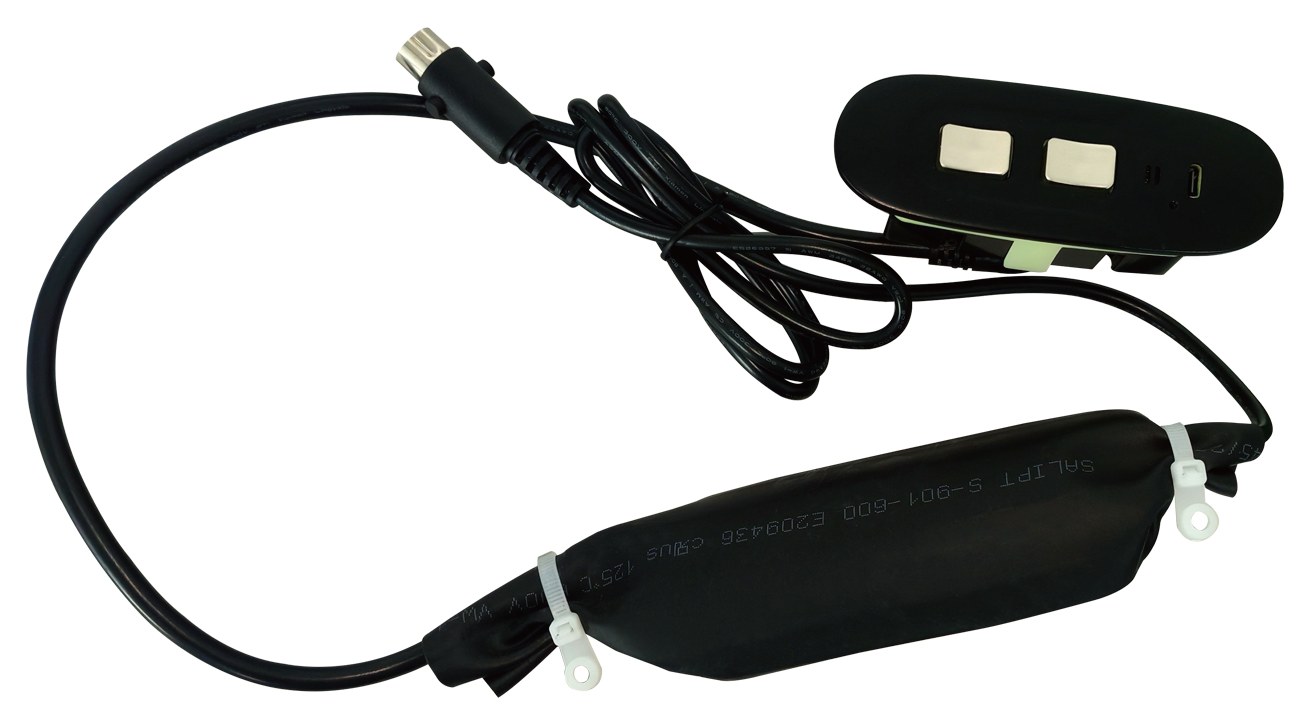
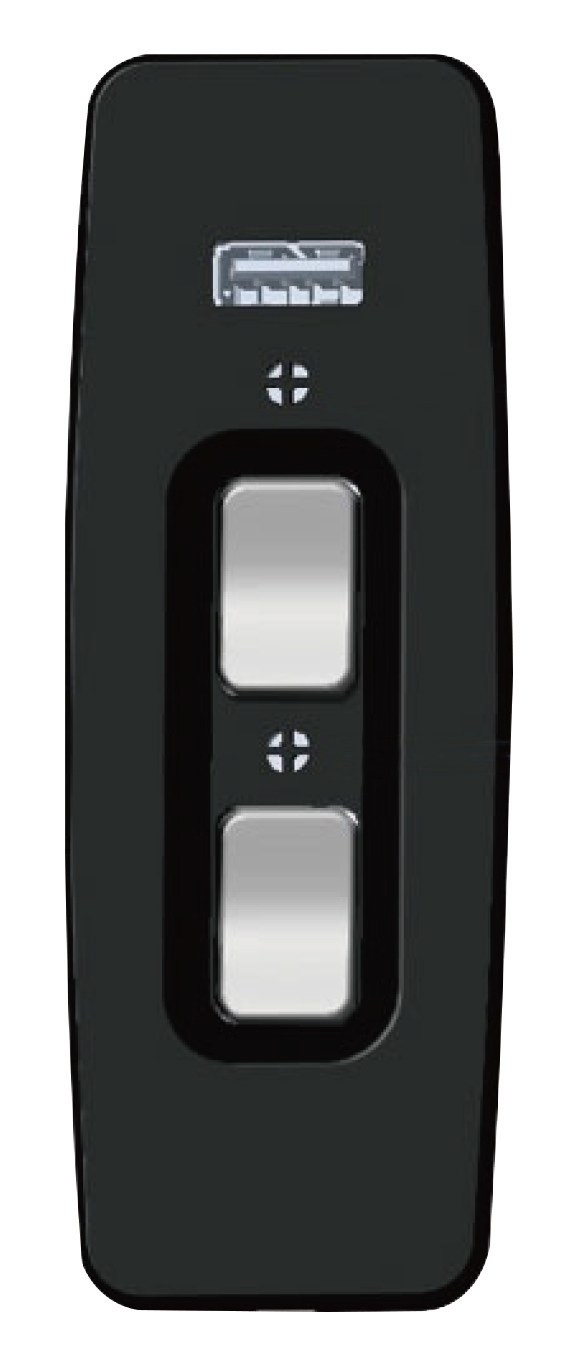
At a practical level, a massage control system has three layers. The input layer is what the user touches or speaks to. The control layer is the electronics that interpret the command. The output layer is the motors, push-rods or massage mechanisms that physically act. You can see the separation in the catalog itself: a manual unit such as the KC02 or KC04 takes button commands, while a voice model such as the KC02VC puts a voice recognition layer in front of the same single-motor control.
What the system does depends on the motors it drives. A single-motor unit moves one actuator; a two-motor unit such as KC04 controls two push-rods. The controller does not change what the motor can do. It decides which commands reach the motor and how many motors can be addressed at once. That is why the second question in any selection is "how many motors, of what type, and what does the mechanism need?" rather than "which controller is best?"
What is the function of a massage control board?
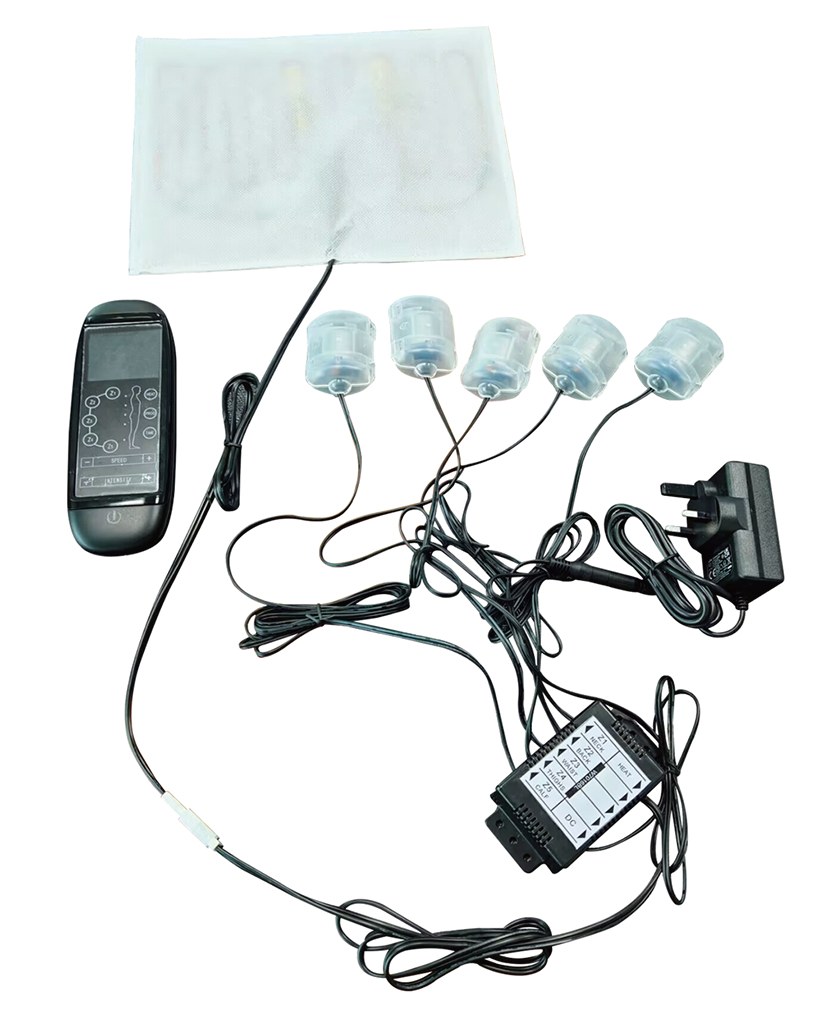
The control board is the internal electronics that carry out the logic. It holds the inputs, drives the outputs and manages functions such as timers, intensity settings and mode selection. In massage vibration systems such as the W7011, the board runs 9 modes, 4 intensity levels and a 5-55 minute timer, with an LCD controller as the user interface. The W7016-2 adds wireless LCD control and a 24W heating element on top of the same 9-mode, 4-level, 5-55 minute structure.
A buyer does not normally choose a bare board. They specify a controller model, which includes the board, the interface and the housing. What matters at the selection stage is that the functions you need are in the model's function list, and that the board's power input matches the supply your product will provide. For anything beyond the listed functions, such as a different motor type or an additional sensor, confirm with the supplier whether the board supports it. Do not assume it does.
Can massage controllers support multiple massage functions?
Yes, but "multiple functions" means something different for each model. The W7011 and W7016-2 are massage systems rather than simple motor drivers, and their listings enumerate 9 modes and 4 intensity levels. A recliner motor controller like KC02 is a different use case: its listing describes a single motor with a USB charging port and does not enumerate any massage modes, so treat mode support as unconfirmed for that model until the supplier states otherwise.
Before assuming a controller can run several massage functions, check three things in its datasheet: how many motors or actuators it can address, how many modes are listed, and the timer and intensity ranges. If your product brief requires functions that are not listed, treat it as a customization request to confirm with the supplier's technical team, not as a feature you can infer from the category name.
Selection criteria: power, channels, control method, integration and documentation
The table below summarizes the models described in the current catalog. Use it as a comparison base, not as a complete specification sheet. Full values for each product are on its own page, and any detail outside the listing should be confirmed directly with the supplier.
| Model | Motors / outputs | Input | Control method | Notable features |
|---|---|---|---|---|
| KC01 | 1 motor | 29VDC / 2A | Button / manual | 5VDC USB charging port |
| KC02 | 1 motor | 29VDC / 2A | Button / manual | 5VDC USB charging port |
| KC04 | 2 motors (push-rods) | 29VDC / 2A | Button / manual | 5VDC USB charging port |
| KL01 | 1 push-rod | 29VDC / 2A | Button / manual | No charging port listed |
| KC02VC | 1 motor | 29VDC / 2A | Smart voice + manual | USB charging port; English voice commands confirmed |
| W6C50BA-VC | 1 motor | 29V / 2A | Smart voice + manual | USB charging; listed for massage function control; English confirmed |
| W6T30-VC | 1 motor (cup holder line) | 29V / 2A | Smart voice + manual | Cup holder LED light with 1-hour timer |
| W7011 | 10 vibrators | 12VDC / 1A | LCD controller | 9 modes; 4 intensity levels; 5-55 min timer |
| W7016-2 | 5 motors (vibration) | 12VDC / 3A | Wireless LCD control | 24W heating; 9 modes; 4 intensity levels; 5-55 min timer |
Power input match
This is the fastest way to eliminate models. The recliner and sofa motor controllers in the table run on 29VDC or 29V input at 2A. The massage vibration systems run on 12VDC, at 1A for W7011 and 3A for W7016-2 with its 24W heating element. If your power supply is 12VDC, the 29V motor controllers do not fit that design, and the reverse is also true. Match the input before comparing any other feature.
Motor channel count
Count the actuators your mechanism needs. One motor, a single push-rod, or two push-rods each corresponds to a different model. Choosing a two-motor unit like KC04 for a single-actuator design adds cost and packaging without doing useful work; choosing a single-motor unit for a two-push-rod mechanism leaves one actuator without a control channel. The vibration systems add a further distinction: W7011 lists 10 vibrators and W7016-2 lists 5 motors plus heating. Note that the two model names use different counting wording — vibrators for one, motors for the other — so treat those figures as separate listings from separate product documents, not as points on one scale.
Control method
Decide how the user will operate the product. Manual units suit furniture where buttons or a handset are the expected interface. Voice units are appropriate when the product design includes voice as a feature, and the model description should confirm both the voice function and the manual fallback. Mixed lines are possible: W6T30-VC combines smart voice, manual single-motor control and cup holder LED control, which is useful if your product combines seating and accessory lighting.
Integration and documentation
Compatibility is confirmed per project, not from a catalog. As a self-check before you enquire, use the two values already confirmed in each listing: the input voltage and the motor channel count. Those give you a first filter you can apply alone. Motor type, control interface, connector wiring, voice details and anything outside the listed functions are the items that must be confirmed with the supplier against your actual requirement. When you request a quote, provide the motor specification, the intended user interface and the control system context. Ask for the documents your engineering team works from: product datasheet, wiring diagram, electrical schematic and installation dimension drawing. Wellness states that these technical documents can be requested per project.
For language and voice details, only use what is confirmed for the specific model. KC02VC, W6C50BA-VC and W6T30-VC each confirm English voice commands, English recognition and English language support in their listings. Do not assume additional languages, protocols or connector types from the category. Those items should be confirmed with the supplier before they appear in your own product documentation.
When voice control makes sense
In this lineup, the voice control system for massage chairs and recliners sits at the input layer and does not change the motor count. KC02VC and W6C50BA-VC both combine smart voice control with manual control of a single motor plus USB charging. W6C50BA-VC is listed as an AI voice controller whose intended application is massage function control, on a single motor channel. Which massage functions it can run in a given design is one of the points to confirm with the supplier, since the listing names the application but not the full function scope. That makes it a reasonable starting point for a massage-equipped recliner where the user should be able to speak a command and still use a manual control when preferred.
If your product is a lighting or accessory feature rather than motor control, the same controller category includes different parts. LED-26-XSVC is a voice and touch-control reading light with 3-level brightness at 12VDC / 1A, and K001 is a far-infrared sensor controller for LED strips at 12VDC / 1A. These are lighting-side controls, not motor controllers, and should be specified as such.
Working with a controller supplier as an OEM
Xiamen Wellness Technology was founded in 2004 and runs two divisions: finished wellness products such as Massage Devices, and massage mechanisms, components and systems. Controllers sit in the second division, which means an OEM buyer can request customization through the company's OEM/ODM services alongside catalog models.
Commercial terms you will want before planning production: MOQ is 1,000 pieces and lead time is 15-45 days per the client document. Payment is T/T or L/C, with T/T 50/50 as the typical arrangement. These are the general terms in the supplier's current commercial document for catalog models; confirm them against your own order at quote stage, and treat custom configurations as separately quoted.
To make the quote useful, send a short requirement package: target input voltage, number and type of motors, control method including whether voice is needed, the user interface, and any accessory functions such as USB charging or lighting. Note which functions are mandatory and which are open. The supplier can then tell you whether a catalog model covers the brief or whether a customization is needed. For custom work, ask which documents will be issued at each stage and whether prototype review is part of the process. Handling these points before the first sample reduces the chance of a mismatch discovered late in tooling.
Start from the Recliner and Sofa Motor Controllers category to see the current models, then send your requirement through the request a quote form. Include your motor specification and intended control method so the reply can address compatibility directly rather than generically.
- A massage controller is an input-to-output unit, not a motor. It decides which commands reach which actuator.
- Match power input first: 29VDC / 2A recliner controllers, 12VDC vibration systems.
- Count actuators before comparing models: single motor, single push-rod, two push-rods, 5 motors, or 10 vibrators.
- Voice is an input option. English command support is confirmed for KC02VC, W6C50BA-VC and W6T30-VC; other languages need confirmation.
- Compatibility is per project. Ask for the datasheet, wiring diagram, schematic and dimension drawing.