
What Types of Massage Devices Are Available for Private Label Brands?
Category Overview · Private Label & OEM
Choosing a massage device category is a supply-chain decision before it is a design decision. The form factor determines your tooling, your packaging, your documentation and the claims you can put on a retail box — and it determines whether the manufacturer you choose can actually build the thing at volume. This guide sets out the types of massage devices available for private label programs, grouped by how they are used, and separates finished consumer products from the components that go inside furniture.
Key takeaways
- Massage device categories are best grouped by body area and form factor: neck, back and shoulder, percussion, leg and foot, scalp, eye, abdominal and waist, hand, head, facial, plus heating and pet lines.
- Finished devices are ready to brand and sell. Components are built-in parts for sofa, recliner and equipment OEMs — a different buyer, a different spec sheet.
- Home-use suitability depends on power source, control simplicity, size and whether the device needs a second person to operate.
- Handheld and wearable massagers solve different problems; the split shows up in battery, weight and how the user holds the device during a session.
In this article
- What are the different types of massage devices?
- Finished massage devices: ready-to-brand products
- Massage components and systems: built-in parts
- Which massage devices are suitable for home use?
- Handheld vs. wearable massagers
- What features should a massage device have?
- Your next step for an OEM project
What are the different types of massage devices?
The most useful way to sort massage device categories is by the body area they target and the form they take. A neck massager is a wrap; a massage gun is a hand tool; a foot massager is a floor unit. Those differences drive everything downstream in a private label project — enclosure design, battery choice, control layout, and how the product ships in a retail carton.
Wellness manufactures finished devices in the following categories. The first eight entries are massage device lines; the last three — facial cleansing brushes, heating pads and warm therapy products, and pet heating and massage products — are adjacent personal-care lines built on the same manufacturing base:
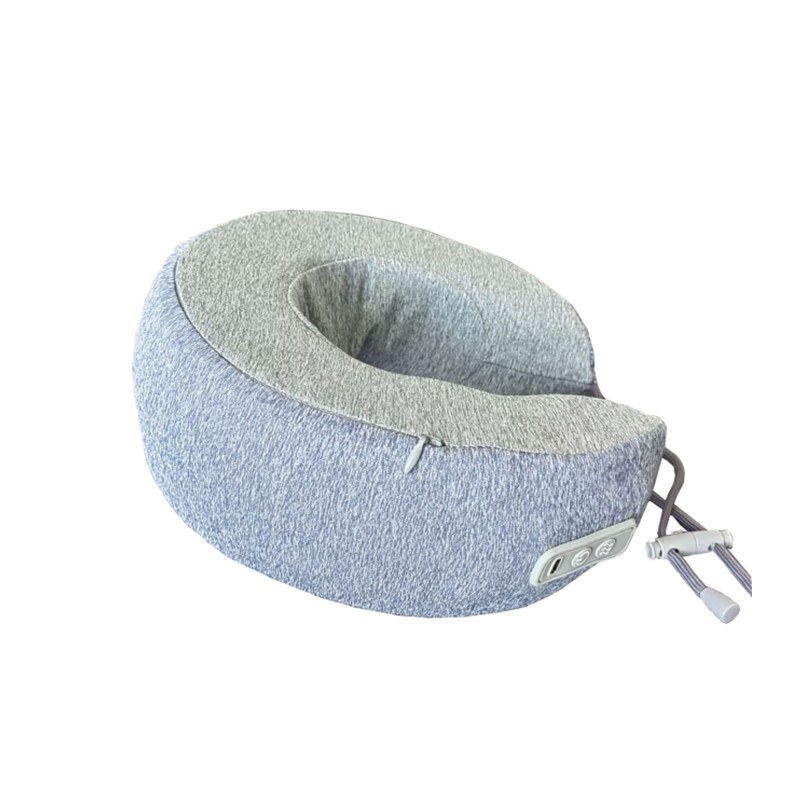
- Neck massagers — wraps worn around the neck and shoulders, typically rechargeable
- Back and shoulder massagers and cushions — node-based units positioned against the back
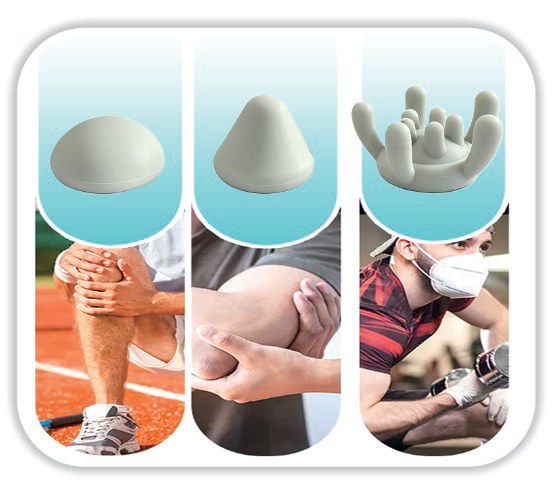
- Massage guns — handheld percussive tools with interchangeable heads
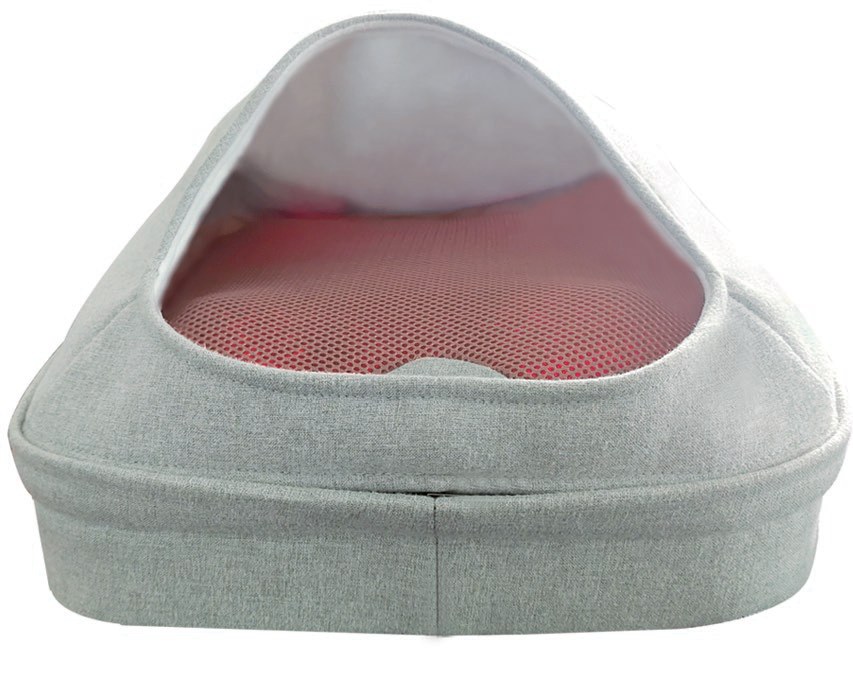
- Leg and foot massagers — floor or seat units for feet and lower legs
- Scalp massagers — multi-node heads for the scalp
- Eye massagers — wands and masks for the eye area
- Abdominal and waist massagers — belts and wraps for the midsection
- Hand massagers and head massagers
- Facial cleansing brushes
- Heating pads and warm therapy products
- Pet heating and massage products
These categories are also the natural building blocks of a product line. A brand entering the wellness space usually starts with one hero SKU and expands along adjacent body areas, so a neck massager buyer later adds back, foot and scalp units using the same retail language and packaging system. You can browse the finished ranges directly on the site, for example the neck massager category, the back and shoulder massager category or the massage gun category.
Finished massage devices: ready-to-brand products
Finished massage devices arrive as complete, functioning consumer products. They carry an enclosure, controls, power source and accessory set, and the private label work sits on top: your logo, your packaging, your manual, your model naming. Below is a short list of current models that sketches how the categories differ in practice.
| Model | Category | Notable listed features |
|---|---|---|
| W3035 Shiatsu Neck and Shoulder Massager | Neck / shoulder | Shiatsu and rolling massage, heating function, 2 speed levels, two-button control (on/off, direction, speed, heating), 1800mAh lithium polymer battery, over 2 hours working time, 2-hour charging |
| W3044 Shiatsu Back Massager | Back | 10 massage nodes, 2 rotation modes, low/high shiatsu intensity, optional heat, 15-minute auto shut-off, ergonomic body-contour design |
| W1601 Palm-Sized Massage Gun | Percussion | 3 interchangeable heads, adjustable percussive speeds, low-noise rechargeable design, portable lanyard |
| W3020 Shiatsu Foot Massager | Foot | 8 deep-kneading rotating nodes reversing every 60 seconds, heating therapy, one-button operation, non-slip rubber base, home adapter included |
| W1700S Electric Scalp Massager | Scalp | 84 individual nodes mimicking four-finger kneading, 4 modes, 2 speeds, bidirectional rotation, removable washable heads, water-resistant body |
| W2030 Hot and Cold Eye Massager Wand | Eye | 40°C heating, 19°C cooling, EMS treatment, ABS construction |
| W3025 Heated Abdominal Massager | Abdominal / waist | Vibration massage combined with kneading and hot compress heating, portable design |
Read across that table and a pattern appears: node count, heat, speed levels and control layout are the variables private label buyers actually negotiate. Two brands can start from the same neck massager platform and end up with different retail positions by changing the heat option, the button logic and the finish.
Massage components and systems: built-in parts
Not every buyer wants a boxed consumer product. Sofa and recliner manufacturers, and equipment makers in adjacent categories, buy massage mechanisms to integrate into their own finished goods. This is a separate line of business with its own spec language, and it is worth keeping distinct from the device catalog.
Wellness supplies component lines including shiatsu massage mechanisms, vibration massage systems, air compression massage systems, massage controllers, heating pads and audio/light systems. A representative example is the W8296 Shiatsu Massage Mechanism, which provides rolling kneading along the back and is designed for integration into sofas and recliners.
The distinction matters at the purchasing stage. A finished device buyer asks about retail packaging, accessory sets and how the unit presents in a carton. A component buyer asks about mounting, the interface to the host furniture, how the mechanism is driven and controlled, and what the integration drawing looks like. If you approach a manufacturer with a furniture integration brief but evaluate the offer against consumer-device criteria, you will compare the wrong numbers.
Integration specifics such as mounting format, drive voltage and control interfaces are confirmed per project — ask the sales team for the integration details of any component model you shortlist.
Which massage devices are suitable for home use?
Home suitability comes down to four practical questions: how the device is powered, how many steps the user needs to operate it, whether it physically fits a living room or bedside context, and whether it works without help from someone else.
| Criterion | What makes a device home-friendly | Where it shows up in the catalog |
|---|---|---|
| Power | A rechargeable battery or a simple home adapter, with no specialist installation | W3035 runs on an 1800mAh lithium polymer battery; W3020 ships with a home adapter |
| Controls | One or two buttons, or a short, obvious cycle of modes | W3020 is one-button; W3035 uses a two-button control for on/off, direction, speed and heating |
| Size and placement | The device sits on a floor, a chair or the body without a fixed mount | W3020 has a non-slip rubber base; W3044 uses an ergonomic contour |
| Self-operation | The user can wear or hold it and adjust it unaided | Neck wraps, abdominal belts and scalp units are worn or held in place |
Home fit varies by category rather than applying across the board: how much setup and attention a device demands sits on a spectrum, and floor units such as the leg and foot massager range and body-worn units such as the abdominal and waist range sit at opposite ends of it. Auto shut-off also belongs in this conversation: the W3044's 15-minute auto shut-off ends a session without the user needing to remember.
What is the difference between handheld and wearable massagers?
The split is mechanical before it is commercial. A handheld massager concentrates force at a point the user steers; a wearable massager distributes contact across an area while the user does something else. That changes weight, battery placement, control placement and the accessory set.
| Aspect | Handheld massagers | Wearable massagers |
|---|---|---|
| How the user applies it | Grips the unit and moves it to the target area | Wears it; the device stays in position on its own |
| Typical categories | Massage guns, eye wands, hand massagers | Neck wraps, abdominal belts, scalp units worn on the head |
| Design pressure | Grip comfort, head interchangeability, noise | Strap or contour fit, weight distribution, heat placement |
| Control location | On the grip, within thumb reach | On the worn unit or a short attached control |
| Example | W1601 Palm-Sized Massage Gun: 3 interchangeable heads, adjustable speeds, portable lanyard | W3035 Neck and Shoulder Massager: two-button control, 2 speed levels, heating |
Neither form is better in the abstract. A brand building a travel-oriented SKU leans toward the handheld side, where the W1601's lanyard and palm-sized format are relevant; a brand building a seated, hands-free routine leans toward wraps and belts. Many lines carry both because they answer different moments of use.
The scalp category shows how the two blur. The scalp massager range includes units such as the W1700S, which is worn on the head and operated through 4 modes and 2 speeds with bidirectional rotation — a wearable by placement, but with a control set closer to a handheld tool. For eye-area products, the eye massager range splits the same way between wands and worn units.
What features should a massage device have?
Feature selection is where a private label brief either stays coherent or expands into a product nobody asked for. The following are the levers visible in the current catalog, and each one carries a cost in tooling, packaging copy or documentation.
Massage mechanism and intensity
Node count and rotation behavior define the feel. The W3044 uses 10 massage nodes with 2 rotation modes and low/high shiatsu intensity; the W3020 uses 8 deep-kneading rotating nodes that auto-reverse every 60 seconds. Reversal is a design choice, not a universal requirement — decide whether you want it before the mechanism is fixed.
Heat and temperature control
Heat appears across categories in different forms: a heating function on the W3035 and W3044, heating therapy on the W3020, hot compress heating on the W3025, and two-direction temperature control on the W2030 (40°C heating, 19°C cooling). Whether heat is standard or optional on your SKU affects both the retail story and the control layout.
Control simplicity
Count the buttons and the settings behind them. The W3020 is one-button. The W3035's two-button control covers on/off, direction, speed and heating. The W1700S offers 4 modes and 2 speeds. More settings give you more to explain on the box and in the manual; fewer settings shorten the learning curve.
Power and runtime
For rechargeable devices, state the battery capacity and the working and charging times you will support in your copy — the W3035 lists an 1800mAh lithium polymer battery, over 2 hours working time and 2-hour charging. Devices with a home adapter, like the W3020, avoid battery questions but tie the user to an outlet.
Auto shut-off and safety behavior
Timed shut-off is a home-use feature worth specifying early. The W3044 includes a 15-minute auto shut-off.
Cleanability and materials
The W1700S has removable washable heads and a water-resistant body; the W2030 is built in ABS. Consider how the user will clean the device and whether the enclosure material should be named in your retail copy.
Accessories and packaging fit
Interchangeable heads, lanyards and adapters all change carton dimensions. The W1601's 3 interchangeable heads and portable lanyard are accessory decisions as much as product decisions.
Your next step for an OEM project
A workable brief for a private label massage device usually contains four things: the category and body area, the form factor (handheld, wearable or floor unit), the feature set drawn from the levers above, and the branding scope — logo, packaging, manual, model naming. With those fixed, the manufacturer can tell you which existing platform fits and where custom tooling would be needed.
If your brief is a furniture integration rather than a boxed product, state it that way from the start and reference the component line, not the consumer catalog.
Wellness works with private label and OEM buyers on both sides of that line. Review the OEM/ODM program to see how custom projects are handled, and send your category, form factor and feature requirements through the request-a-quote form. Minimum order quantities and lead times depend on the model and the customization scope, so the sales team will confirm them against your specific brief rather than a generic figure.
Planning a massage device line? Tell us the body area, form factor and features you need, and we will map them to a platform and quote your private label project.
Explore OEM/ODM Request a quote